Hey there, future American student!
So you’re seriously thinking about packing your bags and heading to the United States for your education? That’s incredible. I know this feels like a huge leap—leaving home, navigating a new system, figuring out how to actually afford it all—but here’s the thing: thousands of international students do this every year, and with the right scholarships, you absolutely can too.
Let me walk you through everything you need to know about scholarships that’ll actually help you get to the USA. No fluff, just the real talk.
Why the USA? (Let’s Be Honest About This)
Look, studying in America isn’t just about the prestige, though that doesn’t hurt. You’re looking at world-class universities, cutting-edge research facilities, and a university experience that’s pretty unique. But more than that, you’re investing in your future career. American degrees carry weight globally, the networking opportunities are unmatched, and the practical training programs (we’ll get to those) let you actually work while you’re there.
But let’s address the elephant in the room: it’s expensive. Like, really expensive. That’s exactly why we’re focusing on scholarships that can actually get you there.
The Scholarships That Actually Matter
Full-Ride Scholarships (Yes, They Really Exist)
Fulbright Foreign Student Program
This is the gold standard, and I’m going to tell you straight up—it’s competitive, but it’s worth applying. The Fulbright Program (run by the U.S. Department of State) covers pretty much everything: tuition, living expenses, airfare, health insurance, the works. They fund graduate students from over 155 countries.
The catch? You need to apply through the Fulbright Commission in your home country, and they’re looking for people who’ll eventually go back home and make an impact. But if you’re serious about making a difference? This could be your ticket.
Hubert Humphrey Fellowship Program
Another State Department program, the Hubert Humphrey Fellowship is for mid-career professionals. If you’ve got about five years of work experience and you’re from an eligible country, you could get a full scholarship for a year of graduate study plus professional development. No GRE required, which is a nice bonus.
University-Specific Scholarships (Where the Real Money Is)
Here’s something most people don’t realize: American universities actually want international students. You bring diversity, different perspectives, and honestly, you make their programs better. That’s why many of them offer generous financial aid packages.
Harvard University
Harvard’s financial aid is entirely need-based, and here’s what’s amazing: if your family makes under $85,000 annually, you’re likely paying nothing. For international students, they meet 100% of demonstrated financial need. Yes, getting in is incredibly competitive, but if you do, money won’t stop you from attending.
Yale University
Same deal as Harvard—100% need-based aid with no loans. They’ve had students from over 120 countries, and about 12% of their student body is international. All undergraduate aid is need-based, meaning you’re evaluated on merit for admission, then they figure out how to make it financially possible.
Stanford University
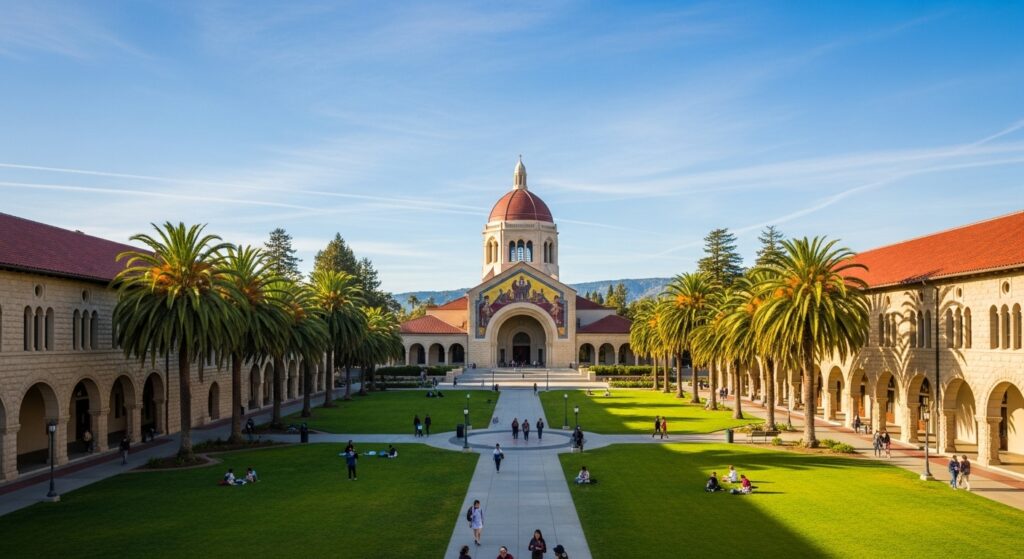
Stanford offers need-blind admission for all students (including international students from certain countries) and meets full demonstrated financial need. They’ve also got the Knight-Hennessy Scholars program for graduate students, which covers tuition, living expenses, and travel—basically a full ride for up to three years.
University of Pennsylvania
Penn offers need-blind admission for undergraduates from the US, Canada, and Mexico, and need-aware for other international students. But here’s the key: they meet 100% of demonstrated financial need for all admitted students. If they want you, they’ll find a way to fund you.
Subject-Specific Scholarships
AAUW International Fellowships
If you’re a woman pursuing graduate or postdoctoral studies, the American Association of University Women offers fellowships ranging from $20,000 to $50,000. They’re specifically for international women who’ll return home after their studies.
The Paul & Daisy Soros Fellowships for New Americans
Okay, this one’s specific: you need to be a green card holder or naturalized citizen (so you’re already in the immigration pipeline). But if that’s you, the Soros Fellowship offers $90,000 over two years for graduate school. Worth knowing about.
Generation Google Scholarship
For computer science students, Google offers scholarships for undergraduate and graduate students, with awards up to $10,000 annually. They’re looking for students passionate about technology and committed to diversity in the field.
The Application Timeline (Don’t Miss These Deadlines)
Let’s get tactical. If you want to start in Fall 2027, here’s roughly when you need to do what:
Spring/Summer 2026 (That’s Now-ish)
- Research universities and programs
- Prepare for standardized tests (SAT/ACT for undergrad, GRE/GMAT for grad school)
- Start working on your essays and personal statements
- Reach out to professors if you’re applying for graduate programs
Fall 2026
- Take your standardized tests
- Submit applications (most deadlines are December-January)
- Request recommendation letters (give your recommenders at least a month)
- Apply for scholarships with early deadlines
Winter/Spring 2027
- Hear back from universities (usually March-April)
- Apply for your student visa (F-1 visa)
- Arrange housing
- Book your flights
The Real Costs You Need to Plan For
Even with a full scholarship, there are expenses you should anticipate:
Before You Leave
- Visa application fee: $185
- SEVIS fee: $350
- Flight to the USA: varies, but budget $500-$2,000 depending on where you’re coming from
- Health requirements and vaccinations: $100-$300
Once You’re There
- Books and supplies: $500-$1,000 per year (though many things are available digitally or used)
- Personal expenses: $1,000-$2,000 per year minimum
- Winter clothes if you’re heading somewhere cold (trust me, don’t underestimate this)
Most full scholarships cover room and board, but if yours doesn’t, expect $10,000-$15,000 annually depending on the city.
How to Make Your Application Stand Out
Look, admission officers read thousands of applications. Here’s what actually catches their attention:
Tell Your Real Story
Don’t write what you think they want to hear. Write about what genuinely drives you. Did you start tutoring kids in your neighborhood because education changed your life? Did a specific problem in your community make you want to study engineering? That authenticity resonates.
Show Impact, Not Just Achievement
It’s great that you got straight A’s, but what did you do with that knowledge? Did you lead a project? Solve a problem? Help others? American universities love “leadership” and “service,” but they’re really looking for people who do things, not just study.
Get Recommendation Letters from People Who Know You
A generic letter from a famous professor is worth less than a detailed letter from a teacher who can speak to your growth, your character, and your potential. Choose recommenders who’ve seen you in action.
Demonstrate English Proficiency
If English isn’t your first language, you’ll need TOEFL or IELTS scores. Most competitive schools want TOEFL 100+ or IELTS 7.0+. Start preparing early—these tests are learnable skills.
Working While You Study (Because Money Matters)
On-Campus Work
With an F-1 visa, you can work up to 20 hours per week on campus during the academic year, and full-time during breaks. This typically pays $12-$15 per hour, which can cover your personal expenses and then some. Libraries, dining halls, research labs—there are tons of opportunities.
Curricular Practical Training (CPT)
Once you’re in your program, CPT lets you do internships or work related to your field of study. This can be paid, and it’s an incredible way to gain American work experience while you’re still a student.
Optional Practical Training (OPT)
After you graduate, you can work in the USA for 12 months in your field (or 36 months if you studied STEM) through OPT. This is huge for building your career, and many students use OPT to gain experience, save money, and figure out their next steps.
The Student Visa Process (Let’s Demystify This)
Once you’ve been accepted and secured funding, you’ll get an I-20 form from your university. This is your golden ticket. Here’s what happens next:
- Pay your SEVIS fee ($350) online
- Complete the DS-160 form (online visa application)
- Pay the visa fee ($185)
- Schedule your visa interview at the U.S. Embassy or Consulate
- Attend the interview with all your documents
Documents to Bring to Your Interview:
- Valid passport
- I-20 form
- SEVIS payment confirmation
- Visa application confirmation
- Financial documents proving you can support yourself
- Acceptance letter from your university
- Test scores and academic records
The interview itself isn’t scary. They mainly want to confirm you’re a genuine student and that you plan to return home after your studies. Be honest, be prepared, and you’ll be fine.
Finding Additional Funding Sources
Your Home Country
Many governments offer scholarships for citizens studying abroad. Check with your country’s Ministry of Education or equivalent. Countries like Brazil, Mexico, Saudi Arabia, and many others have substantial programs.
Private Organizations and Foundations
Rotary International, the Aga Khan Foundation, the MasterCard Foundation Scholars Program—there are hundreds of organizations offering scholarships. Research ones specific to your country, field of study, or demographic background.
University Departmental Funding
For graduate students especially, don’t just look at general university scholarships. Individual departments often have their own funding, research assistantships, or teaching assistantships. Reach out directly to professors in your field.
Living in the USA: What to Actually Expect
Culture Shock Is Real
The first few months will be overwhelming. The food is different, social norms are different, even the way classes work is probably different from what you’re used to. But universities have international student offices specifically to help you adjust. Use them.
The American Classroom Style
Expect participation to matter. American professors want you to speak up, ask questions, challenge ideas. If you come from an education system where you listen and take notes, this might feel uncomfortable at first. Push through it—this is where the learning happens.
Building Your Network
This is crucial: the relationships you build in the USA can shape your entire career. Join clubs, attend department events, talk to your classmates, go to office hours with your professors. These connections matter.
Healthcare
Your university will require health insurance, and it’s usually included in your fees or scholarship. Use it. American healthcare is expensive, but with insurance, you’re covered. Learn how your university’s health center works in your first week.
Making the Final Decision
Here’s the truth: moving to the USA for your education is a massive decision. It’s expensive, it’s far from home, and it’s going to challenge you in ways you haven’t experienced.
But if you’ve read this far, you’re clearly serious about it. And if you’re willing to put in the work on your applications, seek out every scholarship opportunity, and commit to the process, it’s absolutely doable.
Start early. Apply broadly. Tell your authentic story. And remember—universities offer scholarships because they want you there. You’re not asking for charity; you’re offering your talent, your perspective, and your potential.
So, are you ready to do this? Start researching those scholarships today. Your future self will thank you.
Good luck with your applications. You’ve got this.
